
Supply Chain Management in eCommerce: A Complete Guide for Faster, Smarter Online Businesses

In the fast-growing world of online shopping, customers expect fast delivery, easy returns, and real-time updates. Behind every successful eCommerce brand lies one strong foundation: Supply Chain Management (SCM).
From inventory to shipping, supply chain efficiency directly impacts customer satisfaction and business profitability. In this guide, we’ll explore what supply chain management in eCommerce really means, why it’s critical, the challenges businesses face, and how modern automation tools like Simpo.ai help transform operations without writing a single line of code.
What Is Supply Chain Management in eCommerce?
Supply chain management in eCommerce refers to the complete process of sourcing, storing, managing, and delivering products purchased online.
It involves:
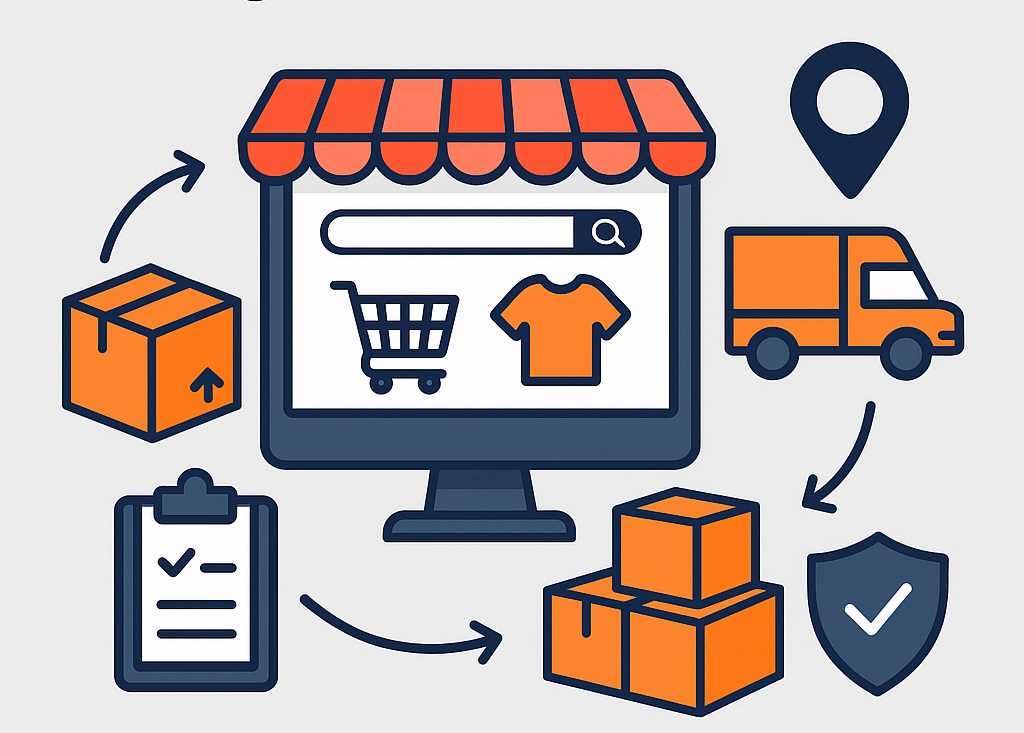
- Inventory planning
- Warehouse management
- Order processing
- Shipping & logistics
- Tracking & customer updates
- Returns & refunds
The goal is simple: Deliver the right product, to the right customer, at the right time — with maximum efficiency.
Why Supply Chain Management Matters in eCommerce
A smooth supply chain gives eCommerce brands a competitive edge. Here’s why SCM is essential:
1. Faster Order Fulfillment
Customers expect 1–2 day delivery. Efficient SCM reduces delays and speeds up dispatch.
2. Happier Customers
Accurate tracking, on-time delivery, and simple returns improve customer trust and loyalty.
3. Lower Operational Costs
Optimized inventory and automated processes reduce storage costs, shipping expenses, and errors.
4. Better Inventory Control
Avoid stockouts and overstocking with proper forecasting and tracking.
5. Higher Business Scalability
A strong supply chain can handle growth without increasing team size.
Key Components of eCommerce Supply Chain Management
1. Inventory Management
Monitoring stock levels across multiple warehouses or marketplaces (Amazon, Shopify, etc.).
2. Warehouse & Fulfillment
Picking, packing, labeling, and preparing orders for shipment.
3. Order Management
Processing customer orders, confirming payments, and routing deliveries.
4. Shipping & Logistics
Working with carriers, optimizing delivery routes, and managing costs.
5. Returns & Reverse Logistics
Handling refunds, exchanges, and damaged products smoothly.
6. Demand Forecasting
Predicting future sales using data to avoid stock issues.
Challenges in eCommerce Supply Chain Management
Even top eCommerce brands face real challenges:
❌ Unpredictable Demand
Customer trends change fast, making forecasting harder.
❌ High Logistics Costs
Shipping, packaging, and reverse logistics impact profit margins.
❌ Lack of Real-Time Visibility
Multiple tools and marketplaces can create confusion.
❌ Manual Operations
Spreadsheets and WhatsApp messages slow down workflows.
❌ Multi-channel Complexity
Inventory must sync across website, Amazon, Flipkart, etc.
How Technology Is Transforming eCommerce Supply Chains
Modern eCommerce relies on automation and data-driven systems:
- Real-time order tracking
- AI-based demand forecasting
- Warehouse automation
- CRM integration
- No-code workflow automation
The more automated the supply chain, the faster and more accurate it becomes.
How Simpo.ai Automates eCommerce Supply Chain Management
Most eCommerce brands still operate using manual tools — Excel, WhatsApp messages, email approvals, and fragmented systems. These processes slow down growth and create errors.
Simpo.ai solves this by allowing businesses to create automated workflows without coding.
With Simpo.ai, eCommerce businesses can:
✔ Automate Order Processing
Trigger workflows when an order is placed: notify teams, update tracking, sync with CRM, and prepare shipping.
✔ Track Operations in Real-Time
Custom dashboards show order status, delays, warehouse tasks, and performance metrics.
✔ Sync Customer & Order Data
Integrate CRM and supply chain to improve communication and reduce mistakes.
✔ Automate Approvals
Refunds, replacements, vendor orders, and purchase requests — all handled automatically.
✔ Eliminate Manual Errors
Replace siloed tasks with end-to-end workflow automation.
✔ Scale Faster Without Increasing Staff
Automation handles repetitive work, allowing businesses to grow efficiently.
Simpo.ai becomes the automation engine behind your eCommerce operations.
Best Practices for eCommerce Supply Chain Management
Implement these strategies to build a world-class supply chain:
1. Use Real-Time Inventory Tracking
Avoid stockouts and reduce backorders.
2. Automate Repetitive Tasks
Order updates, notifications, assignments — all should run on autopilot.
3. Optimize Warehouse Layout
Reduce picking time and increase accuracy.
4. Choose Reliable Logistics Partners
Delivery speed is a major driver of customer satisfaction.
5. Use Data for Forecasting
Analyze historical sales and trends to purchase inventory smarter.
6. Create a Smooth Returns Flow
A simplified returns process increases repeat purchases.
The Future of eCommerce Supply Chain Management
The next generation of eCommerce supply chains will be:
- AI-powered
- Fully automated
- Predictive & real-time
- Customer-centric
- Multi-warehouse optimized
Businesses using platforms like Simpo.ai will be able to run faster, more scalable, and more intelligent supply chains.
Conclusion
Supply chain management in eCommerce is one of the biggest factors determining success. With rising customer expectations and increasing competition, businesses must adopt automation, real-time tracking, and smarter workflows.
Tools like Simpo.ai empower eCommerce companies to automate their supply chain operations, centralize data, reduce costs, and deliver an exceptional customer experience — all without writing a single line of code.
If you want to scale your eCommerce business with efficient, automated workflows, supply chain automation is the key.
